

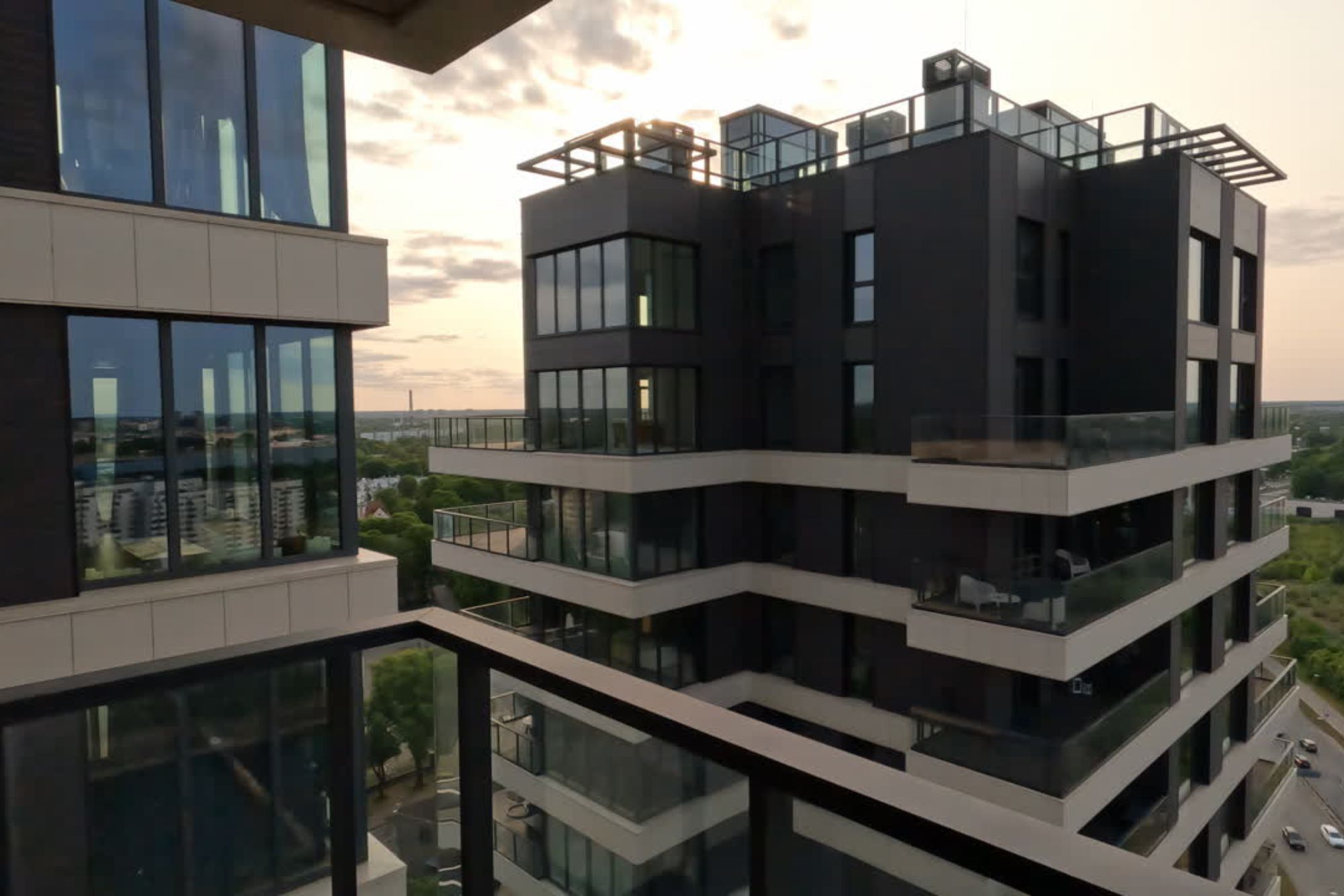
Why Cities Must Build: The Architecture of Resilient Urban Growth
The conversation surrounding urban development is often framed as a conflict between preservation and progress. However, at Raad Ghantous & Associates, we view building not as a disruption of a city’s character, but as the essential heartbeat of its survival. For a city to remain vibrant, it must evolve. The future of our urban centers depends on a willingness to expand housing options that reflect the diverse needs of the people who make those cities run.
When cities commit to building, they are doing more than just pouring concrete; they are strengthening their local economies. A neighborhood with diverse housing options attracts a healthy mix of families, young professionals, and longtime residents. This density creates a reliable customer base for local shops, restaurants, and essential services.
The Economic Power of Density
The numbers back up this vision. Data shows that compact, efficient land-use patterns often generate significantly more tax revenue per acre while requiring less long-term infrastructure maintenance than low-density sprawl. Furthermore, the “multiplier effect” of multi-family housing is substantial. For every 100 new apartments built, approximately $52.8 billion is contributed to the national economy annually through construction, operations, and resident spending.
This is a simple equation: more residents lead to more activity, which allows small businesses to thrive and creates the walkable, energetic neighborhoods that define the “Raad Life.”
Redefining “Affordable”: The 30% Rule
One of the most persistent misunderstandings in urban planning is the definition of affordable housing. Many people immediately equate the term with Section 8 or low-income subsidies, but in the world of professional planning, “affordable” has a much broader, more functional meaning.
In planning terms, housing is considered affordable when a household spends no more than 30% of its gross income on housing costs. Currently, the U.S. is facing a record high where nearly half of all renter households are cost-burdened, spending over that 30% threshold.
When cities fail to provide “attainable” housing, they begin to lose the very people who provide the city’s heartbeat. We are talking about the teachers who educate our children, the nurses and first responders who keep us safe, the young families starting their journey, and the seniors who wish to age with dignity. Building is how we ensure these essential residents are not priced out of their own neighborhoods.
Growth Without Sacrifice: The Design Perspective
At Raad Ghantous & Associates, we believe that responsible growth does not require a trade-off in quality or character. Thoughtful architecture and urban planning allow for “smart density”—the kind that integrates seamlessly into the existing fabric of a city while providing modern solutions for living.
Well-designed housing concepts can actually enhance a neighborhood’s aesthetic. By focusing on human-scale design and high-quality materials, we can create buildings that contribute to the local identity rather than detract from it. This is where architecture meets advocacy: designing spaces that are beautiful enough to be welcomed by neighbors and functional enough to be accessible to the workforce.
The Resilience of New Construction
Beyond the economic and social benefits, there is a critical safety and sustainability argument for new construction. New construction today is exponentially more efficient than it was even a decade ago.
By utilizing advanced building materials and high-performance energy-efficient systems, we can significantly reduce wasted resources. In fact, modern high-efficiency buildings can cut “idle” energy waste by up to 30% simply through smarter design and automated controls.
Perhaps most importantly, modern buildings are engineered to be far more resilient. They are designed with updated fire-resistance codes and structural standards that create safer environments for residents and the surrounding community.
Aligning Vision with Lived Reality
The future of our cities depends on our ability to align planning, design, and the lived reality of residents. At RAAD Ghantous & Associates, we develop urban housing concepts that bridge the gap between “what is” and “what could be.”
Building is an act of optimism. It is a commitment to the idea that a city can be better, safer, and more inclusive for everyone. When we design for density and attainability, we are not just building structures; we are building the foundation for a more resilient and vibrant future.
Contact us today to talk about your next project!